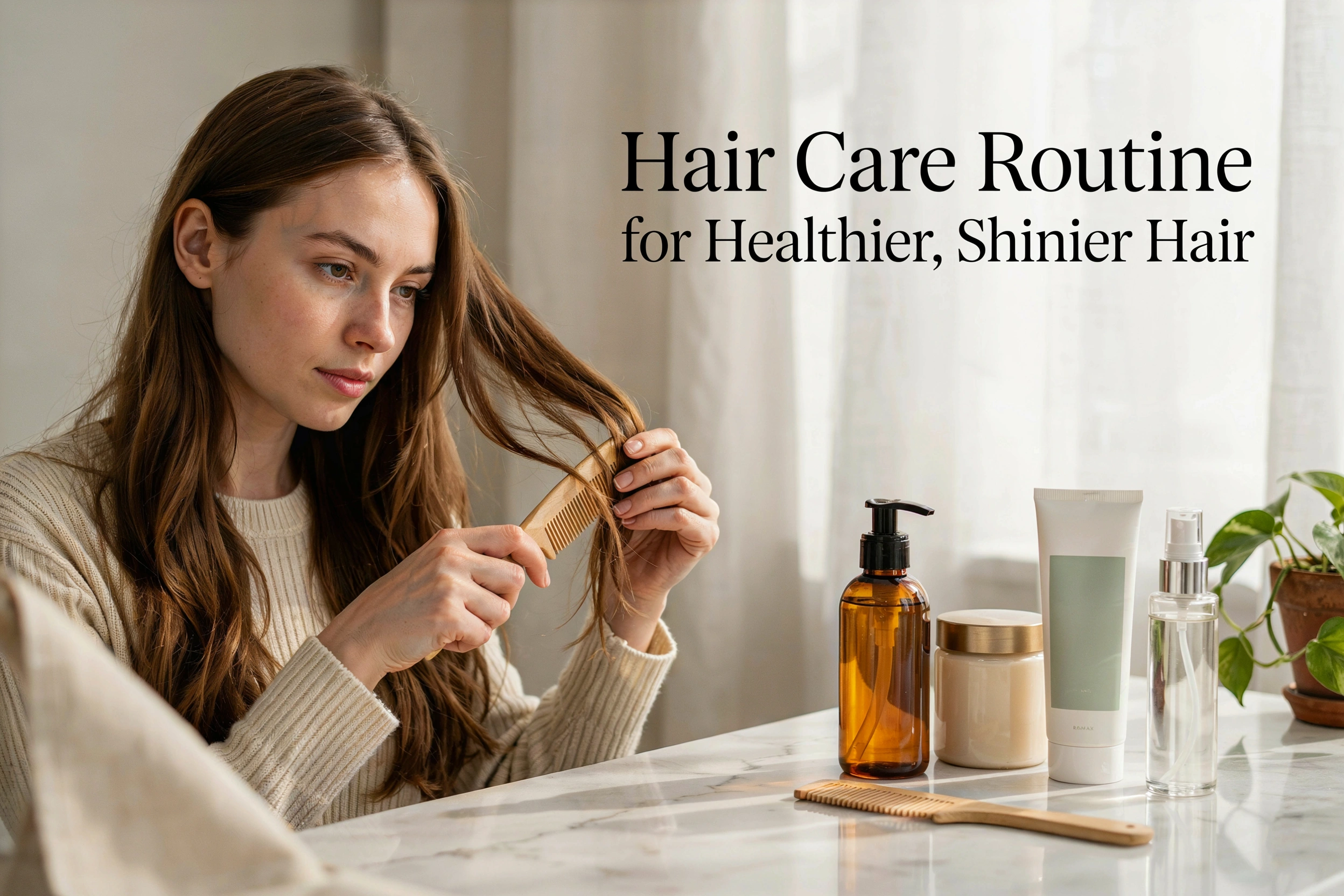
Hair Care Routine for Healthier, Shinier Hair
Build a simple hair care routine for softer, healthier-looking hair with practical tips for washing, conditioning, scalp care, styling, and daily protection.
Your hair can look completely different when you give it the right care. Dry ends, greasy roots, frizz, breakage, and dullness often have less to do with needing more products and more to do with using the wrong routine. A good hair care routine should fit your hair type, lifestyle, washing habits, and the amount of styling you actually do. You do not need a shelf full of expensive products either. A few consistent habits can make your hair easier to manage and noticeably healthier-looking. Here is how to build a routine that makes sense for you.
1. Choose the Right Hair Care Routine for Your Hair Type
It’s important to launch your hair care routine with the right hair type.
Prior to purchasing any further shampoo or treatment, examine your hair carefully. When fine hair tends to feel weighed down, try using thinner conditioners or tone-down products, and for more coarse or thick hair, opt for richer conditioners to help them hold up. If you have curly or wavy hair, this will likely require more moisture; if you have straight hair, then lighter products are probably needed to avoid a greasy look. The condition of your scalp is also important. Your haircare regimen will be different if your roots are oily fast versus dry.
Rather than take a product because it is popular, consider what your hair needs between washes. After 1 day, does scalp feel oily? Does the end of your hair get rough? Fuzzy hair as a result of humidity? These facts give you a lot more information than the label that reads “all hair types.” With an understanding of your hair, finding the right shampoo, conditioner, masks, and styling products is much simpler.
2. Choose the Best Shampoo for Your Scalp
The main action of the shampoo is done on the scalp and roots and you should start by picking the right shampoo for this. If oil production is a problem you might choose a lighter formula that will remove excess oil without leaving the scalp with an onset. A milder shampoo might be more soothing if the scalp feels dry or the hair is easily pulled out. You don’t have to get the most expensive bottle on the shelf. The important thing is what happens to your scalp and hair following the wash.
When washing your hair, focus the shampoo on your scalp and not scrub your hair all over. When the lather rubs through the lengths as they are being rinsed, this is usually sufficient to clean them. Do not use fingernails to massage, and massage lightly for a short period of time. This simple trick can help to make hair washing less harsh, particularly if the hair is already susceptible to dryness or has been colored or treated.
3. Wash Your Hair Based on Its Needs
Generally, there is no set period of time to wait for after washing before you can wash again. Some require washing their hair more often due to the oily scalp while others can go a few days in between. There are various factors that affect how often you shampoo, such as exercise, weather, condition of hair, and styling products. Follow a strict hair washing regimen can sometimes make the process more aggravating than rewarding.
Listen to your scalp. If you think you need a wash because the roots feel greasy, uncomfortable, or covered in products, it might be time to wash. If you have no problems with an itchy scalp, and your hair is still like new, it might not be time to wash your hair. When used properly, dry shampoo can be used in between washings, but shouldn’t replace regular cleansing. A flexible schedule is typically easier to stick to than a random schedule.
4. Use Conditioner After Every Shampoo
Product conditioner makes your hair feel and act better after shampooing. Use it primarily from mid-lengths to the ends of the hair, where it is likely to be drier and more prone to mechanical damage. Unless the conditioner is formulated for the scalp you won’t need to apply it to your scalp. Wait for the recommended time and rinse well, do not rub in the conditioner.
If you have fine hair, then begin with a little and see how it reacts. If your hair is thick, curly, or dry, you may be able to use more conditioner and it might help. You can also modify the location of its application. If you have oily roots and dry ends, you may condition just the lower half of your hair, but if you have very dry ends, you might need more coverage. The aim is to get soft, non-lump, non-stick hair.
5. Add a Hair Mask for Extra Moisture
When the normal conditioner is not sufficient for your hair, a hair mask will be helpful. Over time, dry ends, heat styling, bleaching, and exposure to harsh weather conditions may result in rough ends. Based on the formula used, a mask can also offer further conditioning and help the hair to untangle. It’s not always necessary to use one when washing. Some hair types may feel heavy with an over-abundance of a rich product.
Select the type of mask based on the issue you’re looking to solve. When hair is dry most of the time, opt for a moisturizing product. A chemical or frequent style may be a better choice if it seems rough. Use it primarily in areas where you need it, read the instructions on the product, and listen to the result of your application rather than think more product equals better results.
6. Take Care of Your Scalp for Healthier Hair
Healthy hair begins at the scalp and therefore you cannot ignore the hair while focusing on the lengths. Washing regularly will prevent accumulation of sweat, oil, dead skin and styling products. Gels, dry shampoo, oils, and other products are used regularly can make your scalp feel as if it needs a more thorough cleaning. It can also be comforting to massage the skin gently during the shampooing process without scratching too hard.
Don’t make a complicated mixture of oils and treatments for your scalp. The more products the better, is not always the case when it comes to the health of one’s scalp. If itching, painful bumps, heavy flaking, unusual shedding or other changes that do not improve persist, it’s best to talk to a qualified health care professional before trying any home remedies. In day-to-day maintenance, it is advised that the scalp remains clean, handled with care and products should not irritate it.
7. Handle Wet Hair Gently to Prevent Breakage
Wet hair may be more likely to be stretched and broken, so it’s important how it is handled after washing. Avoid rubbing the hair with a towel, gently squeeze the water out and if you like use a soft towel and/or a microfiber wrap. When detangling, go slowly from the ends upwards and NOT from the roots down through a knot.
For curly, wavy or thick hair, a wide-tooth comb can come in handy to detangle it. Pay attention around “knotty” spots, like the back of the neck. Do not repeat this action when pulling through tangles if your hair is very friable. Using a leave in conditioner or detangling product can help with slip and make it easier. These little adjustments can help to minimize the amount of unnecessary pulling and keep your hair tidier between washes.
8. Protect Your Hair From Heat Styling
Styling tools like blow dryers, straighteners, and curling irons can make it much easier to style, but can make frequent use of high heat dry and rough. For frequent hot tool users, a heat protective product makes sense as part of their routine. Do not apply the tool over the same area for too long at high heat. If possible, use a lower effective temperature and refrain from styling the same area more than once.
You don’t have to sacrifice your favorite hairstyles to cut down on heat. Allow hair to dry partially before blow drying; use a roller or heatless styling techniques for suitable types of hair; reserve very hot products for times when you need the finished effect. When ends are starting to feel brittle and one’s hair is starting to lose its natural texture, this can be a good sign that it is time to cut back on heat and allow the hair to rest.
9. Create a Simple Nighttime Hair Care Routine
Your hair doesn’t cease to rub against itself while you sleep. It can also cause tangling and frizzing when you move around on a rough pillowcase, especially if you have long, curly or dry hair. Untangle the hair before sleep and if it is easier for you to keep your hair tied back, do so. Not tight – too tight tension will cause unnecessary strain on the hair.
Depending on the texture and comfort level of your hair, you can try a loose braid, relaxed ponytail or gentle bun. Additionally, some people may choose to use silk or satin pillowcases as the smoother material can minimize friction. Don’t make bedtime another complex beauty regimen. The thing to remember is that the most important thing is to stay away from tight hairstyles, rough handling, and any unnecessary pulling of your hair and provide it with a simple solution for getting it organized overnight.
10. Protect Your Hair From Sun, Humidity, and Weather
Any change in weather, such as sun exposure, dry air, humidity, wind, and frequent swimming, can alter the feel of your hair. More dryness can be seen after being outside for an extended period and more frizz after humid weather. A hat can offer physical protection on very sunny days and a leave in conditioner will make lengths easier to deal with when they are dry.
If swimming is a regular activity, it is important to pay particular attention. Salt water and pool water can affect the look of hair, particularly if it is already dry or chemically processed. If you use swim goggles, rinse them off after swimming and if you want to get rid of swimming cap residue, rinse your hair with fresh water after swimming. The hair may also be easier to detangle after conditioning or with a product that can be used as a leave-in conditioner. It’s not about avoiding going outside, it’s about taking a little more care of the hair when the weather is tough.
11. Keep Your Hair Care Routine Simple and Consistent
There is so much new hair products and treatments for viruses, oils, serums, masks and sprays that it’s easy to get lost in the shuffle. However, a difficult choreography does not necessarily equal a good choreography. Knowing the basic things: shampoo, conditioner, treatments as needed, detangling, and heat protection. After these instincts are formed, you can introduce a product if there is a particular reason to do so.
It is better to stick with a product than to frequently change them. Allow a new routine ample time to assess the reaction your hair has to it before stopping if it is irritating or if it is definitely not working for you. Make notes if you’re testing out a number of changes simultaneously. This way, you can determine the product that did the trick, rather than taking a wild guess. Usually a simple routine that you do each week will be more helpful than a fancy looking shelf that you don’t use very often.
12. Trim Damaged Ends for Healthier-Looking Hair
While haircuts can’t speed up hair growth from the scalp, they can help the ends to look cleaner and prevent small splits from going further up the hair shaft. The frequency of trim sessions will depend on a multitude of factors, including the style, condition, heat applications, chemical processes and preference. A person with long hair may need smaller maintenance cuts, or someone with a shorter cut might need more frequent maintenance appointments to maintain his cut.
Tend to your ends between appointments. They may be more difficult to work with if they seem rough, if the hair looks visibly parted or if they become more entangled than usual, so a trim could help the hair become more manageable. Don’t overestimate the capabilities of the products. A conditioner or serum can help to make the damaged ends feel and look better temporarily, but it does not repair a split end once it has occurred. The best thing is to sometimes take the damaged area away and begin anew.
Conclusion: Build a Hair Care Routine You Can Follow
Taking an hour every morning, or filling a bathroom with products is not a good hair care routine. Know your scalp and hair type and then layer on the foundations: wash when needed, condition your hair lengths, condition for dry scalp when needed, treat hair when it gets wet and protect your hair from unnecessary heat and friction.
It may change throughout the year, with your haircut, exercise routine, travel or any other change in how your hair feels. This is just fine. Do not duplicate another routine step-by-step, rather take the ideas provided and modify these for your own hair.
Most importantly, stick to a routine! It’s not a single miracle product that usually pumps out healthy looking hair – it’s a lot of little habits over a long period of time. Know what works, retain the positive, eliminate the negative and let your hair guide you. Good hair days don’t always require a lot more, it’s about consistently doing the right things.
Frequently Asked Questions About Hair Care Routine
How Often Should You Wash Your Hair?
No one size fits all washing schedule. The frequency of hair washing will vary according to the nature of your scalp, your hair type, how active you are, the weather and how you dress your hair. If your scalp is oily, you might need to wash your hair more often, but if your hair is dry or textured, you may be okay with longer periods in between washes. Stick to the way your scalp feels, not a set amount of days.
What Are the Essentials of a Basic Hair Care Routine?
Basic products can be shampoo, conditioner, possibly deep conditioning, and care to detangle and protect hair from heat if using hot styling products. Leave-in products or special treatments can be used if there is a special need. Having fewer products also helps you to know which products really make a difference in your hair’s appearance and texture.
How Can You Prevent Hair Breakage?
Treat hair with care, particularly when it’s wet. Do not dry or pull in knots, do not use too tight hairstyles, and do not use unnecessary heat. When using hot tools use a heat protectant and for improved manageability use conditioner. Regular cutting also can help prevent ends from becoming frizzy. In severe or sudden breakage, professional advice may be indicated.
Do You Need a Hair Mask Every Week?
The weekly hair mask is not necessary for everyone. If hair has been chemically treated or is quite dry, coarse or often heated, they may need a deeper conditioning treatment occasionally, but if hair is fine or oily, then it can become weighed down with rich treatments. Use the product according to the instructions and assess the effectiveness based on how your hair feels. If you already have a good conditioner and your hair does not require it very often, then you might not need it often.
What Can You Do to Make Your Hair Healthier?
Don’t look for a magic bullet, but take care of the basics. Shampoo, condition, reduce unwanted heat, detangle gently, avoid frictions and cut off damaged ends as necessary. Your diet and general health may also play a factor in the health of your hair, so it is important to talk to a health care professional if you have an unusual or persistent change in the growth, shedding or texture of your hair.