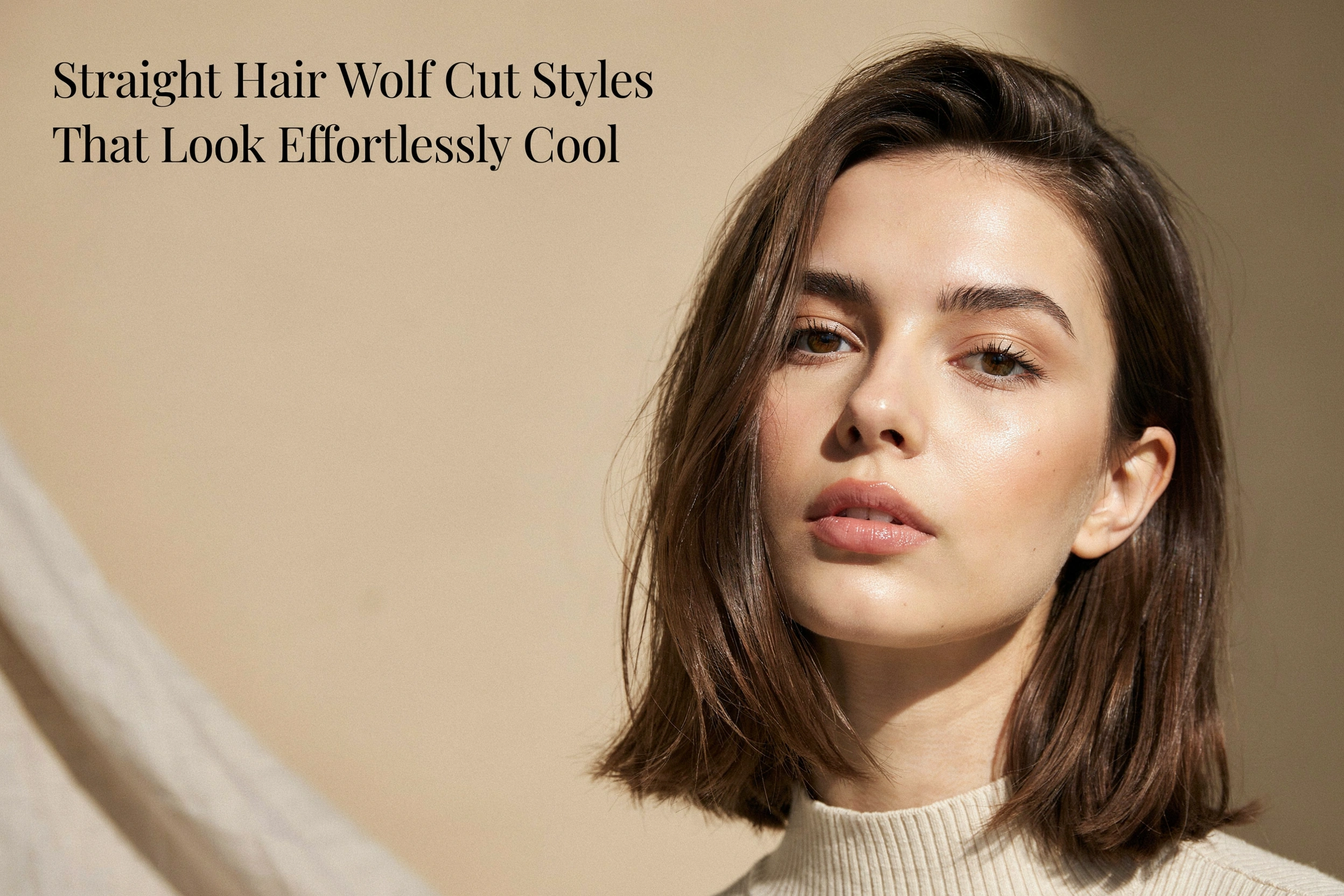
Straight Hair Wolf Cut Styles
Explore straight hair wolf cut styles for every length and personality, with practical styling tips, face-shape ideas, and fresh looks worth saving.
From short to long, floor-length to pixie short, find straight hair wolf cut looks for every length and personality, styling ideas, face shape recommendations and new looks you’ll want to save!
Straight Hair Wolf Cut Styles That Look Effortlessly Cool
Remember a wolf cut can be entirely different on straight hair and that is what makes it so interesting. Good cut relies on layers, shape and strategically placed texture to provide movement rather than relying on waves. But if you’ve been tempted by the trend but concerned that your hair would look like a dud, you shouldn’t rule it out just yet. The correct one can give your strands volume without the length loss and unmanageable hair. Here are straight hair wolf cut styles that will be worth displaying to your stylist.
1. Soft Wolf Cut Naturally Straight Hair

If you’re a fan of a wolf cut but aren’t looking for anything too extreme, begin with a softer take. The ‘blended’ long layers around the crown add movement and maintain a wearable silhouette. You don’t feel like you’ve completely transformed your look, but there’s a difference. This type looks especially good for naturally straight hair as it allows each of them to stand out without being hidden by waves or curls.
If you are new to the extremely short layers, you should ask your stylist to not apply this to you. Short hair around the face and longer hair at the top will give that familiar wolf cut without a lot of matted hair on top. Sometimes a bit of styling cream or a light texture spray will enhance the layers, but straight hair may require little to nothing. Use the blow-dryers and allow the ends to fall into place for daily use.
2. Long Straight Wolf Cut with Face-Framing Layers

However, long hair doesn’t need to be sacrificed when it comes to a wolf cut. Actually, having lots of length can help to create a more elegant and convenient look that is easier for transitioning from a traditional haircut. Long face framing pieces begin from the cheekbones or jaw and merge into longer framing pieces. The end product has action around the face, yet maintains its back fullness and femininity. It is definitely a good choice for people who are concerned with losing a few inches.
This version also offers plenty of styling options. When you want a sleek look, wear it straight, tuck one side behind your ear for a casual look and add some loose bends when you are going out on a special occasion. Polished lengths and choppy upper layers are what makes the signature wolf cut personality. If your locks are long and thin, request a strategic layering instead of taking a lot of length off the ends.
3. Short Wolf Cut for a Bold Change

A shorter wolf cut does a lot more for making a statement, particularly when wearing naturally straight hair. The shorter cut makes the layers around the crown and sides more visible, which makes for a slightly rebellious cut without the need to make curls or waves. It’s edgy, youthful and more versatile than you’d think. This haircut can definitely alter the entire appearance if you have been rocking the same length of hair for years.
The important part is determining the level of texture that is desired. A rock-inspired finish will be achieved by a heavily razored short wolf cut, and a softer layer will appear more polished and wearable. The cut should be influenced by your face shape and the density of your hair. Thick straight hair can support more space between layers, fine hair will generally benefit from some weight on the ends. Take a few photos with you to illustrate to your stylist what kind of choppy cut you want.
4. Straight Wolf Cut with Curtain Bangs

Curtain bangs paired with a wolf cut create a particularly natural look as both styles direct attention towards the face. The bangs may start shorter in the middle and grow longer towards the cheekbones, merging with the rest of the bangs. It looks great on straight hair and flatters the eyes and cheekbones. It also provides a more soft and approachable feel to the traditional wolf cut.
Consider the amount of styling you are willing to do before deciding on curtain bangs. Straight hair might require a quick blow dry with a round brush to make them look their best with a slight curve towards the outside. For those that prefer a wash and go look, request longer fringe that can part naturally rather than shorter, more demanding. This simple tweak can make the haircut a lot more manageable between salon visits.
5. Edgy Straight Wolf Cut with Choppy Layers

Choppy layers are ideal for those who desire the style of a classic shag in a more contemporary cut. On the straight hair wolf cut, there is noticeable hair parting, which provides the hairstyle with a very intentional “messy” look. It doesn’t need to be very even on the ends. That little irregularity is what makes it charming and it doesn’t look like a traditional layered haircut.
This is best suited for medium to thick hair, as there’s sufficient density to allow some texture to be seen. For very fine hair, too many chopped layers could result in a thin appearance, so the stylist might need to retain more weight beneath layers. Individual pieces can be accented with a matte styling paste or texturizing spray. But don’t do too much work with it. The hairstyle should bring out the personality without even touching a styling product.
6. Medium-Length Wolf Cut for an Easy Everyday Style

A medium length wolf cut is a good balance. The ponytail length is sufficient with shorter layers around the crown for simplified styling and movement. This is one of the simplest versions to wear if you’re just entering into the trend. The layered look can be made look really good with a straight haircut as it brings out the look of the layers even if you don’t spend much time on styling your hair.
Medium lengths are also great for those who are growing out an older cut. Your stylist can instead redesign the existing hair into a wolf-like look rather than just chopping it all off to a short cut. Face-framing pieces can help minimize heavy features on the front, and longer pieces will keep the fullness at the back. Let your stylist know if you tend to wear your hair pulled back often. How well the shorter pieces hold can be determined by layering.
7. Wolf Cut with Wispy Bangs for Fine Straight Hair

Sometimes, heavy layered cuts can lead to a flatter look on the flat, fine straight hair, but that doesn’t mean that you shouldn’t choose wolf cut. Wispy bangs and layers that are well-done can give the illusion of movement without taking away too much density. Do not make too many short sections through the whole head – texture facial area and upper areas, fullness through the lower.
This version is particularly flattering on those who wish softness instead of a dramatic rock and roll figure. The fringe may be light feathered so it does not lay heavy on the forehead and the surrounding layers provide a soft framing. Do not apply heavy oils near the scalp and use volumizing mousse at the roots before you blow-dry it. Lightweight products that provide lift without causing the hair to fall down tend to work better with fine hair.
8. Sleek Wolf Cut with a Polished Finish

Not all wolf cuts have to be messy looking. A sleek type is a mix of layered and straight haircut. The layers are still evident through the shape and the hair looks glossy and controlled. Perfect for those who prefer a modern style but are looking for something more appropriate for work, formal wear or times when they want to keep it a bit cleaner.
The key to achieving this look is to think smooth, not voluminous. Use heat protectant prior to using a blow dryer or straightener, and use a little lightweight serum on the mid-lengths and ends. Avoid rooting area to prevent flattening of the crown. The end effect is a cunning combination—in you have the iconic silhouette of a wolf cut, yet still the sleek look of straight hair.
9. Wolf Cut with Bold Money Pieces

For a straight cut, lighter shades of face framing color can help make it look even more dimensional. The lighter areas around the front of the hair, known as money pieces, add focus to the face and accentuate the shorter layers of the haircut. Blonde hair contrasted with dark brown hair has a high contrast look, and caramel, honey or copper tones have a milder effect. The colour can be light or dark, as to how much of a difference you desire.
With straight hair, precision is important, as lines and color placement will be apparent. Make sure to ask your colorist for color options that work with the haircut, rather than following a trend that is popular on social media. The position should complement your bangs and face framing sections. If you think you will have problems with maintenance opt for a shade that is a few shades lighter than your natural color. It will still add brightness to the haircut and not produce a challenging grow out.
10. Shaggy Wolf Cut for a Relaxed, Messy Look

If you’re not really into hair that’s been polished, a shaggy wolf cut is perfect. It’s a combination of uneven layers, feathered ends and ample movement, giving that carefree feel that many people think of with the wolf cut. For those with naturally straight hair, the style can appear even cooler as the texture of the ends creates a contrast to the smoothness of the hair. It is casual yet not like you just neglected to go get your hair cut.
This is a version to keep styling to a minimum. Apply a little texture cream or spray in wet hair and allow to air dry if hair permits. Twist a few sections around your fingers as you dry for an added separation. Not all layers have to fit 100%. Indeed, this style is improved by a minor imperfection. However, if you like having your hair extensively polished every morning, then perhaps a softer wolf cut will work better for your regimen.
11. Straight Wolf Cut for Thick Hair

The good news about a wolf cut is that thick straight hair can provide a lot of natural texture but the bad news is that if they are layered incorrectly then it can look bulky. Excessive weight can be eliminated with strategic internal layers, which retain a full exterior silhouette. Your stylist may also apply texturizing methods to make the hair move as opposed to being a single blocky mass. The idea is not just to thin out the hair; it’s about creating space where the hair can move.
If your hair has been a problem after you wash it and it gets out of control, let your stylist know what your natural hair does. What might feel like a wonderful haircut right out of the salon could feel entirely different at home. Request a shape that fits into your normal regimen. If your hair is thick and straight, this generally means that you need to leave the ends long enough to manage and section the hair that you want to have movement.
12. Face-Framing Wolf Cut for a Subtle Transformation

If you are looking for a less dramatic look, focus the wolf cut effect around your face. Face-framing layers can start around the cheeks, jaw or chin and work their way into longer lengths. This will give you some movement and a bit of a change on the front without drastically changing the back of your hair. The choice is a great one for those who have long straight hair and want something different.
This style also looks great in photographs due to the shorter hair providing a natural frame around the face. The rest of your hair can be smooth, pulled back and tucked behind your ears or pulled back but left loose on the front. When you are talking to your stylist about the cut, let them know where you would like the shortest part to end. Just a couple of inches can have a huge impact on the overall finish.
Conclusion
A good wolf cut can transform the appearance of straight hair, and not necessarily make you into a difficult-to-style haircut. From a soft long layered look to a short choppy cut, curtain bangs to wispy fringe or a sleek polished finish, there’s plenty of room to make the style your own. The thickness, length, natural hair movement and the time spent styling it should all be a factor in the final result.
Take some pictures of the features you like and take note of them before you make a booking. Perhaps it’s the layers that frame the face, the messy ends, or just the added freedom of movement around the crown. If you share that information with your stylist it will be so much more helpful during the consultation.
Most importantly, don’t make the decision of going with a wolf cut because it is in trend. Select the one that works with your schedule. When the form complements your hair, rather than contradicting it, the hairstyle is much easier to wear and that’s when a trend becomes a personal style.
Frequently Asked Questions
1. Is a wolf cut good for straight hair?
Yes, a wolf cut can look great on straight hair. Layering will be evident with straight strands, and the haircut can give the appearance of movement and shape without the need for natural wavy texture. The best version will depend on your hair density and the desired level of texture. In general, if you have fine hair, you can get away with simpler layers that are placed with precision, while if you have thick hair, you can opt for bolder layers.
2. How do you style a wolf cut on straight hair?
If starting with a product, begin with a texturizing or volumizing product, particularly around the roots and shorter layers. Blow dry, lifting the roots and allowing the ends to fall as you please, or round brush for added movement. Some texture spray is necessary to separate the layers. Try to steer clear of heavy products, as they can help to flatten out straight hair and obscure the haircut’s style.
3. Does a wolf cut make straight hair look thicker?
Can give it life and fullness, especially on top and sides. But, fine hair is not physically thicker just because it’s layered. Excessive thinness can actually make thin ends look even thinner. For fine hair, request to maintain weight at the bottom and give some layers up top.
4. What face shape suits a straight hair wolf cut?
This is because the layers of the wolf cut can be arranged in various ways around the cheeks, jaw and forehead, to suit almost any face shape. Fabrics that are longer in length can add softness, and curtain bangs can help to balance out the forehead and cheek area. Don’t just pick a cut because it looks good on your face; take into account your hair type, and the haircut attributes you wish to accentuate.
5. How often should you trim a wolf cut?
The frequency of wolf cuts can vary from every 6 to 12 weeks, depending on your hair growth rate and the desired layer duration. If they are shorter they may require more frequent shaping as the silhouette changes more rapidly as they grow. Longer hair can typically be extended with appointments when the hair is being grown out.